
Active recovery

Active recovery is rest in motion: a light cool-down after training, calm swimming or cycling on a rest day, walking between intervals. It seems obviously beneficial, but studies show an interesting picture: in some respects it really works, and in others it does not. The editorial team looked at where active recovery is justified and how to dose it correctly.
What active recovery is
Active recovery means low-intensity physical activity carried out for the purpose of rest rather than a training stimulus. In contrast, passive recovery is complete rest: sitting, lying down, sleeping.
Three main contexts are distinguished. The first is between repeated efforts within a single training session: light jogging between sprints, walking between sets. The second is immediately after training, that is, the cool-down. The third is separate days with light activity in the training microcycle.
The consensus on recovery in sport (Kellmann and co-authors, 2018) regards recovery as a multidimensional process: physiological, psychological and social. Active recovery affects all three components: it improves circulation, helps to ‘switch off’ and often takes place in pleasant company.
Importantly, active recovery by definition should be light. As soon as the intensity rises, it ceases to be rest and becomes another workout, which requires its own recovery.
| Context | Example | Approximate intensity | Main goal |
|---|---|---|---|
| Between efforts | Light jogging between intervals | Low–moderate | To speed up the removal of metabolites |
| Cool-down | 5–15 min of light walking, cycling | Low | A smooth transition to rest |
| Rest day | Swimming, a walk, yoga | Very low–low | Circulation, mobility, psychological unloading |
Lactate, pH and recovery between efforts
During intense work, lactate forms in the muscles, and along with it hydrogen ions accumulate, lowering the pH. Modern physiology regards lactate not as ‘waste’ but as a valuable fuel: it is oxidised in the heart and muscles and used by the liver for glucose synthesis. The review by Gladden (2004) became the classic exposition of this ‘new paradigm’.
During light activity the working muscles and the heart actively oxidise lactate, so its concentration in the blood decreases faster than during passive rest. This has been confirmed by numerous studies; for example, Menzies and co-authors (2010) showed that the rate of lactate removal depends on the intensity of active recovery and is highest when working at a level close to the lactate threshold.
However, faster lactate removal does not always mean a better subsequent result. For short sprint repetitions the key resource is creatine phosphate, and its resynthesis requires oxygen and occurs faster precisely at rest. Therefore between very short maximal efforts (for example, sprints of 6–10 seconds) passive rest is sometimes more effective than active rest.
By contrast, with long intervals and repeated efforts that rely on glycolysis — for example, in swimming, rowing, wrestling between bouts — light active recovery more often helps. The optimal option depends on the duration of the effort and the break.
A practical rule: the shorter and more ‘explosive’ the work, the more sense there is in passive rest between efforts; the longer the glycolytic segments and the breaks between them, the more useful light active recovery is.
The cool-down after training: needed or not
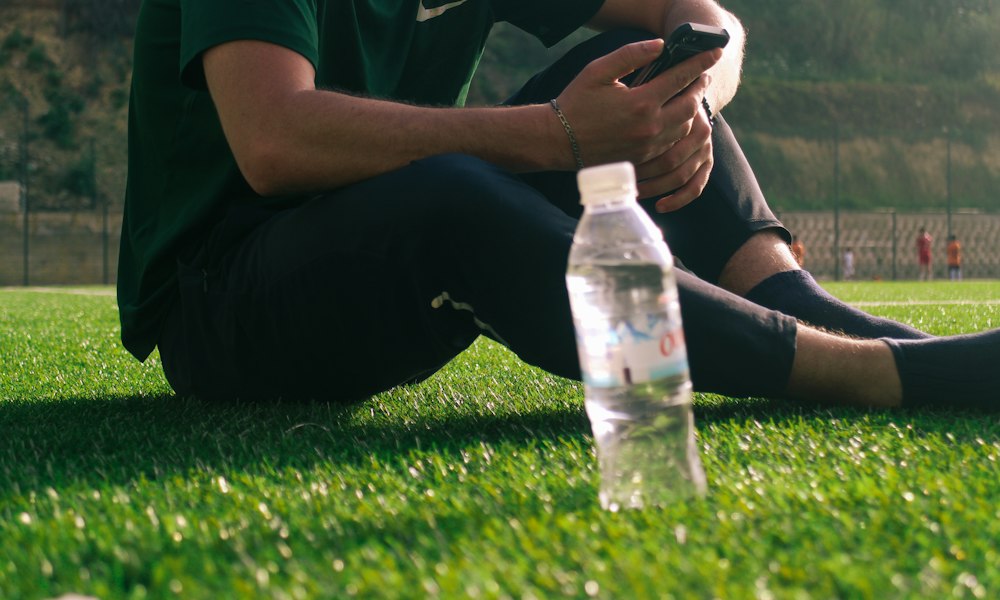
The cool-down is a traditional element of any training session. The narrative review by Van Hooren and Peake (2018) analysed in detail what it provides. The conclusions turned out to be sober: an active cool-down speeds up lactate removal and the return of pulse and breathing to rest, but has little effect on delayed-onset muscle soreness, on next-day performance and on injury risk.
At the same time the cool-down has practical value. A sudden cessation of intense work, especially in a standing position, can cause dizziness: the muscle ‘pump’ of the legs stops helping the return of blood to the heart, and blood pressure drops. A few minutes of light movement soften this transition.
In addition, the cool-down is a convenient moment for psychological unloading, discussing the session with the coach, calm stretching and rolling. For many athletes it is a ritual that helps to ‘close’ the session.
So the cool-down is not mandatory for accelerating recovery, but it does no harm either. If you have 5–10 minutes, light movement after an intense workout is a sensible choice. But if there is no time, skipping the cool-down will not spoil your progress.
The systematic review by Ortiz and co-authors (2019), devoted to active recovery methods in adult high-level athletes, also points to the heterogeneity of results and the absence of a universal protocol, so the choice of method should be adjusted to the specific sport.
Active rest days
In a training microcycle, complete rest days are often replaced by days of light activity. A walk, calm swimming, cycling at a conversational pace, yoga — all of this supports circulation, mobility and a good mood without creating a significant load.
For people who feel ‘worn out’ and stiff after complete rest, an active day may be more comfortable. For others, on the contrary, complete rest restores better, especially psychologically. There is no universal recipe here.
Interestingly, active recovery can be an alternative to cold procedures. In the study by Roberts and co-authors (2015) the group that did light work on a stationary bike after strength training gained more muscle mass and strength than the cold-bath group. That is, light activity does not interfere with adaptations the way cold can.
- Choose a type of activity different from your main sport, to give the loaded structures a rest.
- Duration — 20–45 minutes, without the goal of beating personal records.
- Intensity — you can talk freely, the pulse is moderate.
- Add calm stretching and mobility exercises.
- Go out into the fresh air — this is good for sleep too.
How not to turn recovery into a load
The most common mistake is too high an intensity. A ‘light jog’ turns into a tempo run, ‘calm swimming’ into intervals, and a rest day into another workout. As a result the total load rises, and no real recovery takes place.
A subjective rating of effort (about 2–3 out of 10), the talk test and the pulse can serve as benchmarks. If after a ‘recovery’ session you feel fatigue rather than freshness, the intensity was too high.
The second mistake is excessive duration. Two hours of ‘light’ cycling is already noticeable work for a person who is not a cyclist. For recovery a short session is usually enough.
Finally, active recovery does not compensate for a deficit of sleep and nutrition. Light movement helps, but only against a background of full sleep, a sufficient amount of protein and carbohydrates and sensible planning of loads. Subjective scales and objective indicators, in particular heart rate variability, help to track whether you are really recovering.
Editorial conclusions
Active recovery speeds up lactate removal and the smooth return of the body to rest, but has no significant effect on muscle soreness and subsequent performance.
Between very short explosive efforts passive rest may be better, whereas with longer glycolytic intervals light movement more often helps.
Active rest days are useful if the intensity is really low. Light activity does not interfere with muscle adaptations and can be an alternative to cold procedures.
We also advise reading our articles on cold procedures, on mobility and MFR, and on heart rate variability as an indicator of recovery.
References
- Van Hooren B, Peake JM. Do we need a cool-down after exercise? A narrative review of the psychophysiological effects and the effects on performance, injuries and the long-term adaptive response. Sports Med. 2018;48(7):1575–1595.
- Menzies P, Menzies C, McIntyre L, et al. Blood lactate clearance during active recovery after an intense running bout depends on the intensity of the active recovery. J Sports Sci. 2010;28(9):975–982.
- Gladden LB. Lactate metabolism: a new paradigm for the third millennium. J Physiol. 2004;558(Pt 1):5–30.
- Kellmann M, Bertollo M, Bosquet L, et al. Recovery and performance in sport: consensus statement. Int J Sports Physiol Perform. 2018;13(2):240–245.
- Ortiz RO Jr, Sinclair Elder AJ, Elder CL, Dawes JJ. A systematic review on the effectiveness of active recovery interventions on athletic performance of professional-, collegiate-, and competitive-level adult athletes. J Strength Cond Res. 2019;33(8):2275–2287.
- Roberts LA, Raastad T, Markworth JF, et al. Post-exercise cold water immersion attenuates acute anabolic signalling and long-term adaptations in muscle to strength training. J Physiol. 2015;593(18):4285–4301.
Andriy Melnyk
A strength-sports coach and author of programs for beginner and intermediate levels. Writes about training planning.